
Week 1
The real cost of a missed call for HVAC businesses (and what to do about it)
If your company misses 4 calls a day, you're losing six figures a year. The math is uncomfortable. The fix is straightforward.
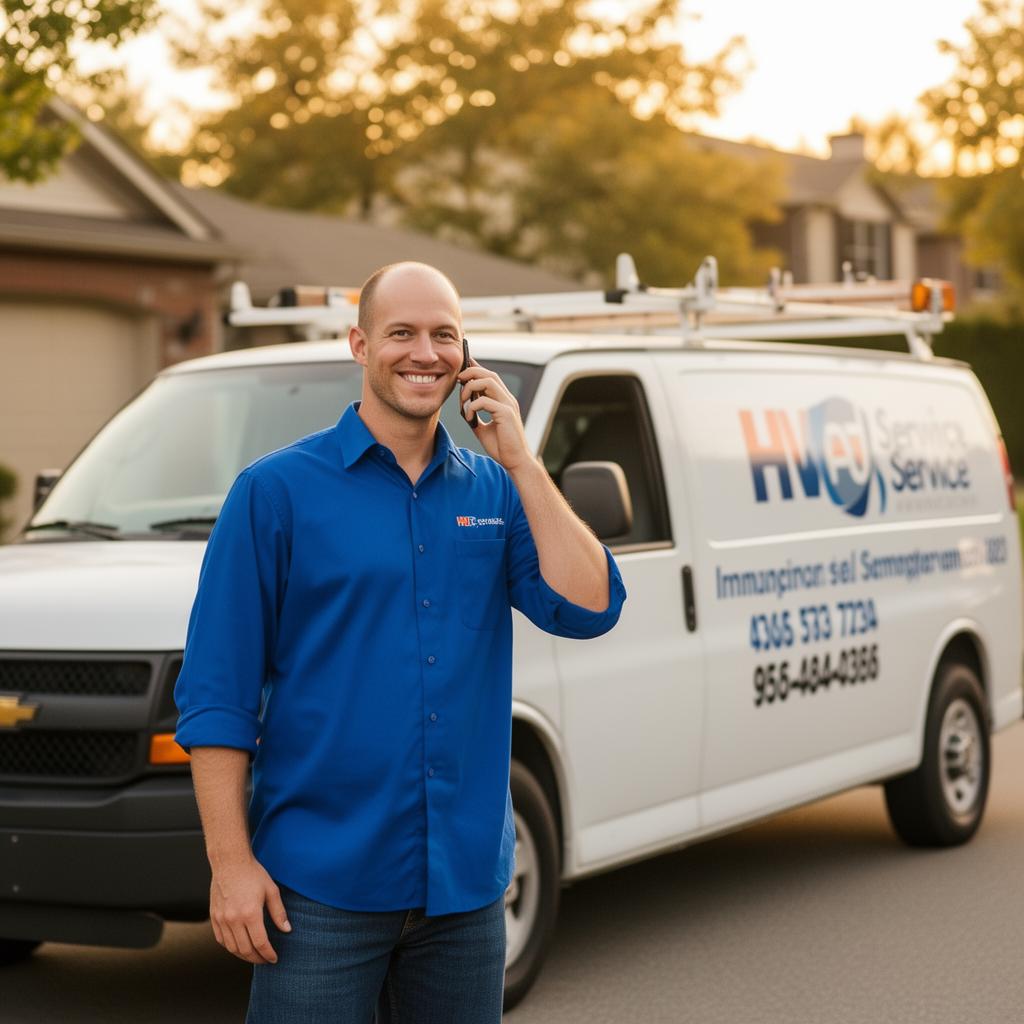
Every HVAC owner has the same suspicion. The phone rings while the tech is on a ladder, in a crawlspace, or driving between jobs. Sometimes the call goes to voicemail. Sometimes the customer hangs up and calls the next company on Google. You'll never know how many of those calls turned into someone else's revenue.
It's possible to put a real number on it. The math is brutal but it's also clean.
Run the numbers on your own business
Start with three figures you already know.
- Your average ticket size. For most residential HVAC companies this lands between $400 and $1,200, with installs pushing $5,000 to $15,000.
- Your close rate when someone actually reaches you. The industry benchmark is 50 to 70 percent for service calls and 25 to 40 percent for installs.
- How many calls a day you miss. Be honest. Pull a week of phone logs if you don't know. Most small to mid-size HVAC shops miss 4 to 12 calls a day, with the number spiking in heat waves and cold snaps.
Now do the multiplication. A shop that misses 6 calls a day at a 40 percent average close rate and a $700 average ticket is losing $1,680 a day in revenue that walked to a competitor. That's $437,000 a year, assuming you work 260 days.
Even if you assume only half of those missed callers would have actually booked, you're still leaving $218,000 on the table. The math doesn't get less uncomfortable the longer you sit with it.
Why missed calls cluster around the worst possible moments
The pattern most HVAC owners notice but can't fix is this: missed calls don't spread evenly across the week. They concentrate during the times you can least afford to miss them.
When a heat wave hits, every customer with a struggling AC unit calls at once. Your phones light up. Your dispatcher is on three lines at the same time. The fourth caller goes to voicemail. The fifth caller calls a competitor. By the end of the week you've turned away the exact emergency volume that would have padded your margins for the quarter.
Same pattern in cold snaps. Same pattern on Sunday afternoons. Same pattern after 6 PM when the office line stops being staffed but customer furnace failures don't stop happening.
The companies that capture this overflow are the ones with answering coverage in place before the heat wave starts. Not during. Not after. Before.
The three options HVAC owners typically consider
Most HVAC companies eventually try one of three approaches to handle inbound coverage. Each one has tradeoffs that are worth being honest about.
Hiring a full-time dispatcher
Costs $45,000 to $65,000 a year fully loaded, plus management overhead. Covers business hours only unless you stack shifts. Pays off quickly if you have the volume but adds an HR layer most small HVAC shops don't want.
Using a human answering service
Costs $300 to $1,500 a month depending on volume. Coverage is 24/7. The downside is that the operators don't know your trade. They take a message, route it back to you, and the customer waits. By the time you call back, they've often booked elsewhere. The conversion math doesn't improve much over voicemail in many cases.
Using an AI receptionist
Costs vary but the better managed services come in well below a human dispatcher. Coverage is 24/7. A well-trained AI agent can actually book the appointment, qualify emergency vs scheduled, sync with your CRM, and dispatch in real time. The downside is that not all AI services are equal. Generic chat-style AI agents struggle with HVAC vocabulary, regional accents, and the operational urgency of emergency calls.
What changes when every call gets answered
Not every missed call is a missed sale. Some callers are price shoppers who would have closed elsewhere anyway. Some are wrong numbers. Some are already-booked customers calling to ask about their appointment. The total isn't a perfect proxy for lost revenue.
But the directional truth holds. HVAC companies that move to 24/7 coverage with a system that can actually book appointments consistently report 15 to 35 percent more booked revenue in the first 90 days. Some of that is recovered emergency volume. Some of it is the realization that they were missing booking calls on weekends. Some of it is callers who would have hung up on voicemail but stay on the line with a system that engages them.
The owners who have made the switch all describe the same emotional shift. They stop dreading heat waves. They stop feeling guilty about leaving voicemail messages on a Sunday. They start sleeping through the night during peak season because the phone is being handled while they sleep.
The conversation worth having with yourself
If you took the math at the top of this article seriously, you already have your answer. The question isn't whether missed calls are costing you money. The question is what you're willing to invest to stop losing it.
Worth knowing: the cost of a managed AI receptionist for HVAC is almost always less than the revenue from a single missed-then-recovered emergency call in a peak week. The math compounds from there.
Get a custom estimate for HVAC inbound coverage
DialPal builds managed AI receptionists for HVAC companies. We learn your trade, your service area, your emergency dispatch rules, and your booking system. The DialPal team handles setup, voice training, and ongoing tuning so you don't have to.