
Week 1
AI receptionist vs answering service: which is right for your business?
Both promise the same thing: someone answers when you can't. The differences matter more than most business owners realize when they're shopping.
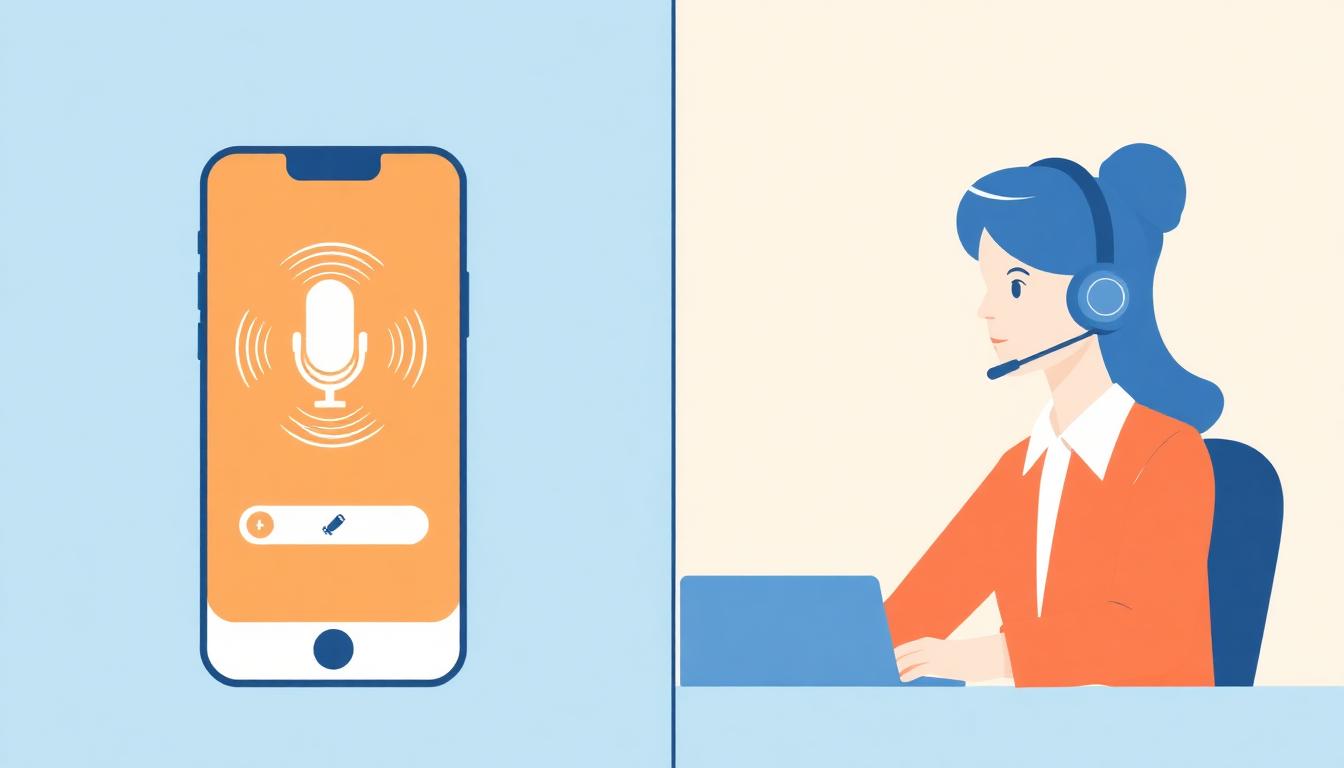
The labels get thrown around interchangeably. AI receptionist, virtual receptionist, AI answering service, traditional answering service. They all describe a service that picks up the phone when your business can't. The category is genuinely confusing because most providers use whatever label is currently winning search traffic.
Underneath the labels are two real categories of service. Knowing which one you're shopping for is the difference between solving the missed-call problem and renting a slightly nicer voicemail.
What a traditional answering service actually does
A traditional answering service is staffed by human operators. They sit in a call center, usually somewhere with a low cost of labor. When your business's phone rings outside hours (or when your line is busy), the call routes to one of these operators. They answer with a script you provide. They take a message. They send the message to you via email, text, or app.
Some traditional services offer light booking through a portal or shared calendar, but the booking rate is low because the operator doesn't know your trade well enough to confidently confirm anything beyond a callback request.
The category leaders include Ruby Receptionist, Smith.ai (their human service), AnswerConnect, and dozens of smaller regional providers (we cover the landscape in more depth in our roundup of Ruby Receptionist alternatives). Pricing typically runs $150 to $1,500 a month depending on call volume.
Where it works: businesses where a callback-within-an-hour is acceptable. Law firms. Accounting practices. Professional services. Anything where the inquiry is exploratory and the buyer isn't in distress.
Where it breaks down: emergency services. Trades. Healthcare. Anywhere a delay of 15 minutes between the call and your callback means the prospect has already moved to a competitor.
What an AI receptionist actually does
An AI receptionist is software that answers the phone, holds a real conversation, and takes action. Not all AI receptionists do the same thing or work at the same level. The category is young enough that quality varies wildly.
The lowest tier is essentially an automated phone tree with voice recognition. It listens for keywords and routes the caller. It can take a message. It does not really book anything.
The middle tier is a conversational AI that can answer common questions, handle basic intake, and pass complex calls to a human. Pricing usually starts around $99 a month and scales by call volume.
The top tier is what DialPal builds: a managed AI receptionist trained on your specific business, integrated with your CRM and scheduling system, capable of booking appointments, qualifying leads, handling emergency dispatch, and synthesizing the interaction into your daily report. The AI does the work. A human team trains it, tunes it, and stays accountable for performance.
Where it works: anywhere call volume justifies real coverage and the caller wants resolution, not a message taken.
Where it breaks down: businesses with extremely low call volume (under 30 calls a month) where the setup cost doesn't pay off, and businesses where caller demographics are genuinely uncomfortable with AI.
The five questions that decide which one fits
Skip the comparison charts. Ask yourself five questions and the answer surfaces.
1. How fast does a caller need a real answer? If "within an hour" is acceptable, a traditional service works. If "right now" is the answer, you need an AI receptionist that can actually book and confirm.
2. Can the caller's question be answered without human judgment? Booking an appointment, confirming hours, providing pricing brackets, taking intake information, routing emergency calls: all of this can be handled by a trained AI without a human in the loop. Negotiating a complex sale, navigating an angry customer escalation, or explaining nuanced policy still benefits from a human.
3. Is your business industry-specific in its language? Traditional answering services use generic scripts. They struggle with HVAC, dental, veterinary, and other trade-specific terminology. A well-trained AI receptionist can be fed your terminology and become fluent in it.
4. Do you have a CRM or scheduling system you want the answering layer to talk to? Most traditional services either don't integrate or charge significant premiums for integration. The better AI receptionists make this the default.
5. What is the all-in cost compared to revenue captured? Do the math on missed-call revenue (start with the framework in our previous article on the cost of missed HVAC calls). The number you're willing to invest in coverage should be a fraction of the revenue you're currently leaving on the table.
Where the category is going
Five years from now the distinction between AI receptionist and answering service will likely have collapsed. Every category leader will have AI handling the front line, with human escalation paths for complex calls. The companies that haven't made the transition will be paying premium prices for what is effectively a worse product.
The transition is already happening. The well-funded AI receptionist companies are pulling market share from traditional answering services in trades, healthcare, and home services specifically. Traditional services are responding by adding their own AI tier, but the legacy of human-operator pricing and infrastructure makes it hard for them to compete on cost.
What to actually do
If your business is in a high-urgency vertical (HVAC, plumbing, dental, veterinary, med spa, mental health, anything where a missed call is a lost customer), an AI receptionist is the structurally correct answer.
If your business is exploratory professional services with low urgency, a traditional answering service may still be the right call, particularly if your callers are demographically resistant to AI.
If you're somewhere in the middle, ask the providers you're evaluating for a live demo of how they would handle three of your most common call types. The quality of the demo tells you everything.
Get a custom estimate
DialPal is a managed AI receptionist service built for home services and health and wellness businesses. Our team handles setup, voice training, and ongoing optimization. We learn your business so the AI sounds like it works for you, because it does.